

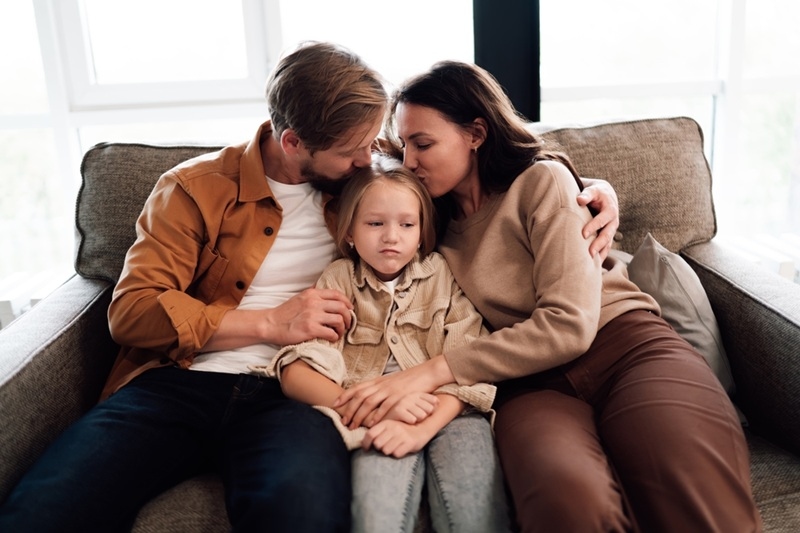
It isn't about purchasing high-priced toys or envisioning an ideal childhood when we consider how to foster happy children. Love, concern, care, and a secure environment are key components needed in the life of a child. However, it is in the smallest parenting practices we carry out in daily life that our children gain a sense of self-esteem and their emotional development takes flight. Through listening and allowing our children to vent emotions or setting healthy daily routines, we create positive behaviors that become a permanent part of their disposition throughout their lives.
The best parenting habits consist of:
When your child speaks, it is important that they know that their words are taken into consideration. That is one parenting practice we all should instill in ourselves: to stay calm and not interrupt when your child needs to share about how they are feeling or what their day consisted of. This ensures a healthy relationship of emotional stability.
When children are heard, it improves their emotional health, builds confidence, and trust. Open and closed communication among families increases family wellness and provides stronger family relationships. These parenting habits instill security and emotional stability for a child.
Children don't crave material things; they seek attention and love from their parents more than they will ever want something monetary. Providing them with one-on-one time where you share common activities, like reading, cooking, or taking a walk around the block, gives a child the one-on-one attention they desire, builds a stronger connection and relationship with you and your child, and supports family wellness.
This also helps with a child's emotional health and provides the parents with a better understanding of their child.
Children gain a sense of security with familiar surroundings and predictable behaviors. Establishing a daily routine of food, rest, and activities, whether it is feeding them at the same time every day or helping them with their homework at a specific time each day, this also reduces stress and ensures the family gains stronger family wellness, child emotional health, and positive discipline, like taking care of themselves and their tasks.
Most people have a tendency to praise children when they reach a milestone or when something is completed with perfection. This is the wrong kind of parenting practice to use. Children need to feel they have put effort forth and not just focus on the end result of whatever task that may be. This will enable your child to become more resilient, grow as an individual, and build their confidence and emotional health.
Allowing children to have their own sense of independence helps them develop confidence and take responsibility for themselves and their actions, thereby impacting their emotional health. Things like allowing your child to pack their own school lunches or make their own daily schedule are excellent examples of parenting practices that are very beneficial for children. This also helps the parent provide support and guidance while allowing the child to gain more confidence.
Most children don't fully express emotions like frustration, anger, and sadness, so by helping kids communicate during difficult times, they will learn how to better express and manage them. Teaching emotional expression is the healthiest thing parents can do; children who understand how to manage them tend to fare better under stressful circumstances. Children's emotional health enhances family well-being by improving children's emotional expression at home.
Your children need concrete and understandable expectations that they can use as a benchmark to feel safe, so rules on behavior, screen time, homework, respect, etc., will allow for responsible and well-behaved kids, but will bring a feeling of order into the home. The easiest way for children to learn how to behave positively will be to discipline them in a Calm, Fair, and Consistent manner, more so than any other parenting skill.
Children can only learn from what they see and hear. So, demonstrate to children what you want them to be: Kind, patient, loving, and honest. A good parenting approach is through examples instead of talk. If you can maintain a composed behavior while dealing with your children's problems and express yourself kindly towards others, your child will follow you in the same behavior.
While computers, tablets, and cellphones can be excellent tools to help teach children and keep them entertained, too much time in front of the screen can limit emotional interaction and communication among families. Get your family involved in activities that foster physical contact, creative pastimes, dialogue, and pretend-play.
Balanced parenting promotes healthy child emotional health by improving the way children communicate socially, understand emotions, and pay attention. Better family wellness results from more hands-on and eye contact-based family interactions.
Parenting is never an easy job; you always want the help of those who are the most knowledgeable on parenting matters and whom you trust implicitly. Friends, teachers, neighbors, relatives, and the support from communities are often invaluable for any parent who needs help through stressful times of parenting.
Healthy parenting support helps you, as a parent, stay calm and collected at all times. Child emotional health will be improved by a parent who takes advantage of a family that supports the well-being of the home by enhancing family wellness overall.
In their later years, children grow to understand how their experiences throughout childhood shaped them to become who they are as adults. This is where positive parenting habits will help children increase their self-esteem, build coping skills and communication, as well as enhance strong family bonds. Family wellness will increase through an environment that fosters positive emotions and creates security, which is essential for the success of a child at school, in friendships, and toward their own feelings.
Healthy parenting also leads to less conflict between family members and a more understanding relationship. The small everyday actions that parents display through discipline and understanding will greatly impact who their child becomes as an adult.
It is clear that not complicated strategies are required for positive parenting to be successful. Listening to, spending time with, communicating with, and following routines can provide significant changes in a child's emotional health and well-being. Children thrive when they feel loved, secure, and understood; so parents should continue to utilize and practice all of these positive parenting habits.
They are also beneficial because they help children to become more confident, emotionally intelligent, and communicative toward those with whom they will continue to build relationships throughout their entire life. A stronger sense of family wellness will always lead to happier, more emotionally connected families who value relationships.
Parents can build their children's emotional confidence by active listening, valuing trying, and enabling children to freely express emotions. When they practice positive communication and provide support for all of the feelings children experience, children come to feel safe and cherished.
Children can benefit from the stronger emotional ties created through shared experiences and quality family time. Children learn that their parents have the capacity to make them feel loved, cared for, and important by devoting themselves to the child. Positive family communication at home fosters better child and family health and a trustworthy child-parent relationship.
For children, predictable routines provide them with a sense of security that can alleviate anxiety and help them to have better behavior control as they mature. Children have improved control and balance emotionally when they know what to expect in terms of routines in their family environment over time.
Strong parental support will allow parents to address stresses and challenges more peacefully, thus creating a stronger sense of well-being and child emotional health in the family atmosphere.
This content was created by AI