

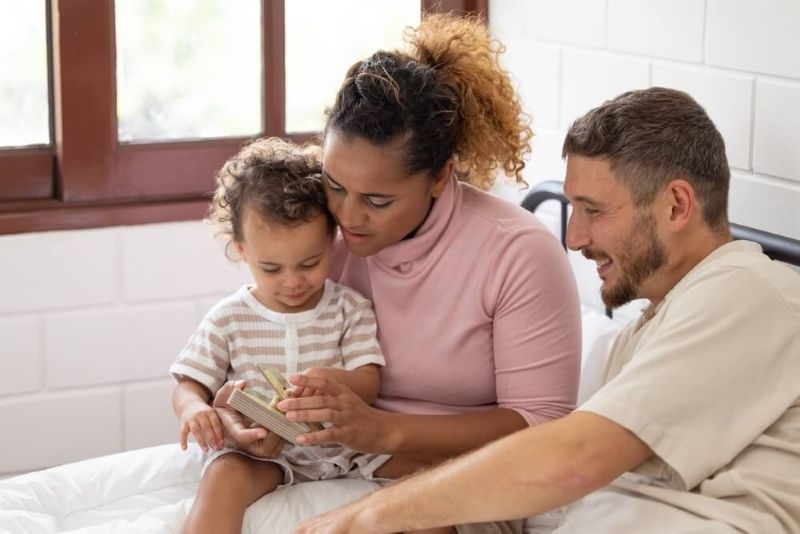
Waiting for kindergarten to start teaching your kid is a massive mistake. The first five years physically wire their brain for life. Understanding these core early learning benefits changes exactly how you interact with your child daily. This is not about creating a stressed-out baby genius. It is about giving them the raw tools to survive a competitive world.
You can check this blog to understand the benefits of early learning and the different stages of a child's brain development.
Early learning is not just about flashing alphabet cards in a baby's face. It is about building a mental floor so the house does not collapse later. Here is exactly what you get when you start early.
Kids who start learning early figure out how to share, take turns, and read the room. They learn how to exist around other human beings without panicking or throwing a physical fit every time they hear the word "no."
They learn that screaming does not magically solve a dispute over a toy. They learn how to negotiate, trade, or just walk away when a situation gets too heated. This kills the habit of throwing physical tantrums.
They learn how to handle disappointment. They figure out how to process intense frustration when a toy does not work or when they lose a simple board game. You are building their mental shock absorbers.
You cannot teach a two-year-old like a five-year-old. You have to match the input to what the hardware can actually handle. Here is the raw breakdown of child brain development.
This is rapid-fire physical and sensory mapping. They are figuring out how their hands work, what gravity is, and how to recognize familiar faces. It is all about touch, taste, and visual input. If you lock them in a playpen all day or prop them in front of a screen, their brain literally stops searching for new connections. You have to physically engage them.
The brain kicks into overdrive here. They start connecting words to objects and stringing loud thoughts together. If you are not talking to them constantly, reading out loud, and forcing them to use their words instead of pointing at what they want, they fall behind immediately. Make them ask for the water; do not just hand it to them.
They start asking "why" a hundred times a day. This is when they start building executive function, figuring out cause and effect, and learning how to actually control their reckless impulses. You have to answer their annoying questions. If you just tell them to be quiet, you teach them that curiosity is a bad thing.
If you want a kid who does not quit the second something gets hard, you have to start right now. So, why is early learning important for young children? Because it dictates exactly how they view challenges for the rest of their life.
Think of the brain like a muscle. When you introduce puzzles, letters, and numbers early, you literally force the brain to build stronger, faster neural pathways. You are upgrading their processor.
A kid who learns early realizes that messing up a drawing or dropping a block is just part of the process, not the end of the world. They learn how to try again without screaming or shutting down.
Kids who learn to love the process of figuring things out do not become lazy teenagers. They build a solid work ethic before they even know what the word means.
A good preschool is not a taxpayer-funded daycare center. It is a controlled environment designed to push kids entirely out of their comfort zones. Here is how preschool education actually impacts them.
Mom and Dad are not there to open every single snack wrapper or fix every minor problem. Preschool forces them to figure things out with their own two hands and deal with minor setbacks alone.
They learn the hard way that adults outside their family also have rules, and those rules are completely non-negotiable. It stops the entitlement fast. If they break a rule, they sit in a timeout.
They learn that different places have different expectations. What flies at Grandma's house does not fly in a classroom. They learn to adapt to new rules instantly.
You cannot just expect a kid to put in hard work without feedback. You have to pay them for their effort, and their currency is your approval. Here is why celebrating learning milestones is non-negotiable.
When you celebrate them tying their shoes or finishing a puzzle, their brain gets a massive hit of dopamine. They want that hit again, so they repeat the hard work without you nagging them to do it.
Hitting a milestone and getting recognized for it proves to them that they are capable of tackling difficult tasks. It kills their self-doubt before it can take root in their brain.
Rewards show them exactly what you value. If you only cheer for perfection, they become terrified to try new things. If you aggressively cheer for the effort, they become relentless hard workers who don't care about looking foolish while they figure it out.
Stop wasting the first five years waiting for the public school system to do your job. The early learning benefits are completely undeniable and set the trajectory for the rest of their life. By actively supporting their child's brain development and getting them into a solid preschool education program, you hand them a massive and unfair advantage.
Yes. Early learning is about play-based exploration, not forcing a three-year-old to memorize multiplication tables or drill flashcards. If you stress them out and turn learning into a chore, they will hate school before they even start first grade. Keep it fun and interactive.
Absolutely, if you actually put in the work. You need a set daily routine, frequent social playdates to mimic the chaos of a classroom environment, and the discipline to turn off the TV. If you cannot commit to that level of structure, pay to send them to preschool.
Do not panic immediately. Every kid runs on a slightly different timeline and brain schedule. However, if they are severely behind on speech or gross motor skills, stop guessing on internet forums and take them to a pediatrician. Early intervention fixes most problems quickly, but ignoring the problem just makes it worse.
This content was created by AI