

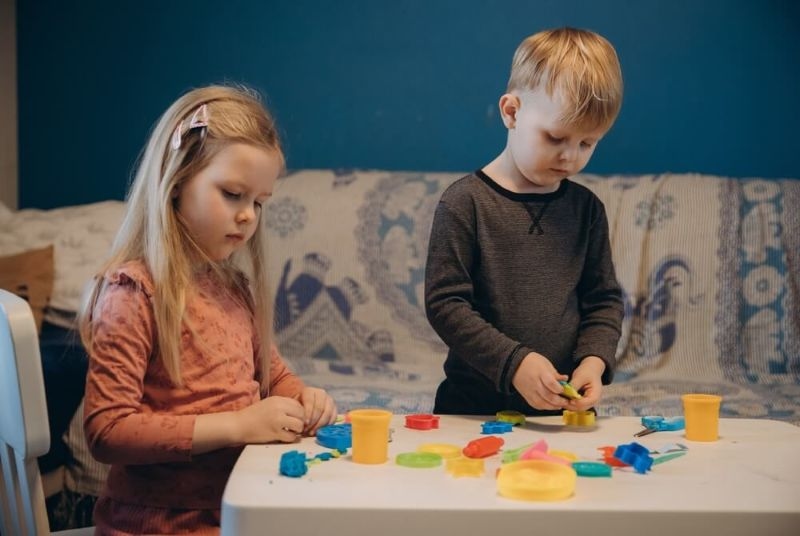
Preschoolers use small hand muscles all day without noticing it. Holding crayons, buttoning shirts, turning pages, and even peeling stickers. Those tiny movements matter more than people think. Fine motor growth affects writing, eating, dressing, and focus — lots of basic tasks get easier once the fingers learn control. But kids don’t improve through drills alone. They need messy play, repetition, and odd little games that seem pointless at first.
Some children pick up these skills quickly. Others struggle with grip strength or coordination for months. Normal. What helps most is steady practice at home without pressure hanging over every activity. In this blog, we’ll go through simple fine motor games, sensory ideas, creative tasks, plus easy preschool routines that quietly strengthen hand control while kids stay busy and entertained.
Children usually learn faster when the activity feels loose and playful. Sit them at a table with worksheets too long — attention disappears. But give them cotton balls, kitchen tongs, tape, water, and beads. Different story.
Take dry pasta, pom-poms, beans, or buttons. Then hand over spoons, tweezers, silicone tongs, and even ice cube trays. Kids move items from one bowl to another while trying not to drop them. It looks simple, yet fingers work constantly.
This builds grip control, palm strength, plus finger isolation. Those are needed later for pencil use. Some kids rush. Others line every object carefully in rows. Either works.
Peeling stickers sounds tiny because it is. Yet that peeling motion trains fingertips hard. Use reusable stickers if possible. Ask children to place them inside drawn shapes, over letters, or beside matching colors.
A lot of preschool activities fail because they become too structured too quickly. Stickers avoid that problem. They feel casual. Low pressure.
Not cutting. Just tearing.
Give old magazines or colored paper. Ask kids to tear strips, circles, rough animal shapes — whatever keeps hands moving. Tearing paper needs controlled resistance, which strengthens smaller muscles across the hand.
Messy floor afterward is probably guaranteed.
Not every learning task needs craft supplies. Some of the best preschool activities happen during ordinary routines at home. Fast setup. No complicated prep.
Clip clothespins around boxes, cups, baskets, or shirt edges. You can turn it into a color-matching game or a counting activity. Opening and squeezing clothespins takes real finger pressure, especially for younger preschoolers. Hands tire fast at first. That’s fine. Short sessions work better anyway.
Set out two bowls. One filled with water. Kids use droppers, turkey basters, syringes, or measuring spoons to transfer liquid between containers. Spills happen constantly, but coordination improves quickly. The squeezing motion strengthens hand muscles while also improving control. Besides, most preschoolers stay focused longer when water is involved.
Large beads, cereal loops, pasta tubes — anything with holes works. Use yarn or shoelaces with taped ends. Children thread pieces slowly while trying to avoid dropping them. This develops visual tracking next to hand movement accuracy. A frustrating skill for some kids, honestly. But repetition smooths it out over time.
Children don’t think about “coordination.” Adults do. Kids just stack blocks until towers collapse. Still, those games matter because the brain and hands begin working together more efficiently.
Big blocks are easier. Smaller blocks require precision. Encourage children to build upward slowly instead of racing. They learn pressure control almost by accident. A shaky tower teaches more than a perfect one sometimes.
Most parents already own Play-Doh, yet they only use it for random squishing. Add tools. Rolling pins, plastic scissors, cookie cutters, straws, and forks. Suddenly, the activity becomes more demanding for fingers.
Give these quick activities a try:
Each of these moves helps boost hand coordination—but they feel more like play than practice.
Tape paper to walls, windows, and cardboard boxes. Vertical drawing changes wrist position and shoulder use. Surprisingly helpful for grip development. Kids usually stay interested longer, too, because standing feels different from sitting at a table all day.
Some games support fine motor growth without looking educational at all. Those are often the best kind because children repeat them voluntarily.
Wooden puzzles with knobs work for younger preschoolers. Older children can handle interlocking pieces. Picking up, turning, rotating, and then fitting puzzle parts develops controlled movement steadily.
Not every child enjoys puzzles, though. Don’t force it too long.
Cut slots into lids or use piggy banks. Kids push coins, poker chips, or cardboard circles through narrow openings. The wrist rotates slightly during insertion — useful for hand control. Cheap activity. Weirdly effective.
Fill small spray bottles with water. Let children “paint” fences, rocks, walls, or pavement outside. Repeated squeezing builds hand endurance pretty quickly. Some kids spray nonstop for twenty minutes, which is excellent, honestly.
Fine motor development happens slowly. Almost unevenly. One week, a child can’t hold scissors correctly, and next week, they suddenly button their own sweater without help. That’s usually how it goes. Small muscles need repetition, but children learn best through play that feels open and flexible rather than strict practice sessions. The good thing is that most fine motor work can happen using ordinary household items. Bowls, stickers, clothespins, paper scraps, spray bottles. Nothing fancy required. Keep activities short, rotate them often, and allow messes sometimes.
They don’t need hour-long sessions. Around 15 to 30 minutes total across the day is usually enough. Short bursts work better because preschoolers lose focus quickly. A few minutes here and there add up over time.
Honestly, it can if kids spend hours just tapping or swiping a screen. Those motions don’t work the hands much compared to things like cutting, drawing, squeezing, or stacking. The trick isn’t to ban screens completely, but to make sure kids spend time actually using their hands.
Watch for signs like having a hard time holding crayons the right way when drawing, avoiding puzzles or stacking games, fumbling with buttons and zippers, struggling to grip objects tightly, or getting upset by small tasks that need hand control during daily routines.
Absolutely. Kids build hand control naturally when they dig in sand, pick up leaves, aim water bottles, gather stones, or draw with chalk outside. Plus, open-air play usually keeps them interested longer.
This content was created by AI