

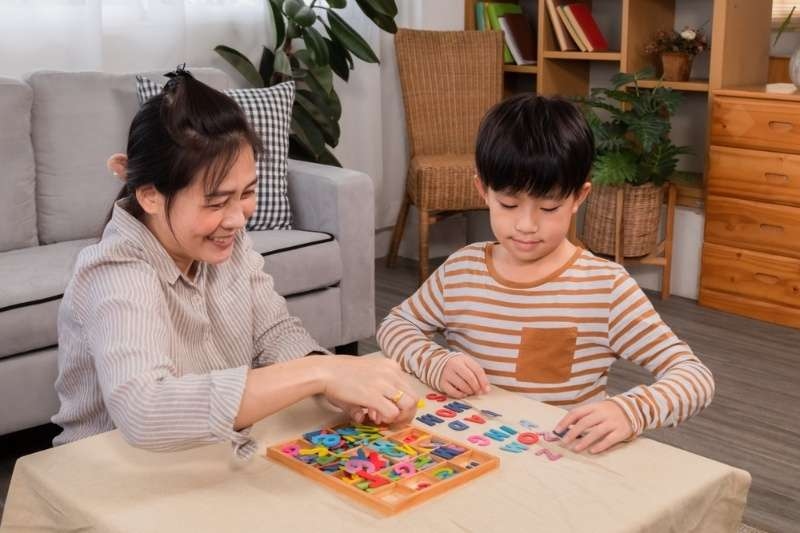
Memory games offer a fun way to help children learn new things. Games like these naturally strengthen concentration, thinking ability, and problem-solving skills. Parents, caregivers, and teachers often find it easier to use memory games in order to simplify learning brain development activities. This guide carries some easy memory games for kids to enhance their learning power.
These memory games for kids allow children to recall information, follow directions, and problem solve:
Matching card games are some of the most used memory games for kids, which will increase focus in your child. Children must flip cards and then remember the matching picture as they take turns. This activity is an amazing way for children to begin to build information and have recall skills.
These games are also great concentration games since the child has to focus in order to win the game. Parents can purchase cards with colors, animals, numbers, or letters and begin to introduce learning through these cards. These games will boost the skills of observation and patience as your child continues the educational play.
"Simon Says" is a fun way to begin to build listening skills and recall ability in children. They must remember to listen carefully because they are to follow directions only when the sentence begins with the phrase, "Simon Says."
Many teachers also utilize this activity in their brain-boosting games since this will increase a child's span of attention. "Simon Says" is one of the easiest memory games that helps children learn faster due to the combined activities of listening, moving, and thinking.
Storytelling games help children retain the memory of information that they are being told while boosting creativity. A child will begin a story, and the next person will state the story back before adding an additional sentence. As the story builds, children can and must retain each sentence that has been spoken before.
These are excellent memory games for kids to learn how to increase memory as well as develop and utilize language and sequencing skills. Storytelling supports learning through fun as it helps children develop their imaginative skills and increase their recall. Children who are engaged in storytelling will often become better speakers and listeners.
Parents can hold a picture up for one minute and then ask the child what they remember about it. This activity builds the child's visual memory and power of observation.
Picture recall is one of the easiest concentration games since they must pay strict attention to the image. This will also boost reading and listening skills, which will be implemented in the classroom.
Puzzle games help children increase their brain development. It builds upon their problem-solving and logic skills by forcing the child to remember different shapes and patterns.
Many parents use puzzle games to answer which memory games help children learn quickly because they build a child's decision-making skills and patience. Jigsaw puzzles and number puzzles build the child's need to think critically and learn at the same time.
Tray memory games are easy to prepare and can be used anywhere. A parent can put numerous objects onto a tray and allow the child to observe them for a minute, and then, once covered, try to remember all of the items.
This activity helps children with the ability to recall images. It also assists with the span of attention. More items or a smaller span of observation time will increase the child's challenge.
These games strengthen word knowledge. Children must say a word, and the next child must come up with a word that starts with the last letter of the previous word. An example is that a child could say, "Apple," and the next word would start with "E" for "Elephant."
These are great memory games for kids to strengthen verbal memory and increase word power, along with quick thinking. Word chain games are also a good family pastime on road trips.
Rhyming games allow children to become better communicators and develop their vocabulary. The object is for each child to be able to find rhyming words without repeating any they may have heard earlier.
This will not only strengthen reading and spelling skills, but it will also make the games part of brain development games that help the children learn about sounds within words.
Music can enhance memory and recall ability since it stimulates the brain through rhythms and repetition. Games that combine singing with movement enhance coordination and listening skills.
Teachers include music in many of their brain games for kids because it is a relaxing and fun learning experience for young children.
Treasure hunts utilize every skill that the brain may need for quick learning. Treasure hunts help children increase memory, along with critical thinking skills. They are expected to work through clue after clue and reach the correct solution.
This can be a wonderful way to create physical movement and education while having fun. Treasure hunts help children develop important learning skills.
Some digital games help with improving memory as well as increasing learning speed. Memory games on digital devices help children by providing engaging matching games along with a few sequencing and problem-solving skills.
Ensure that the digital games that your child is playing are designed as learning tools. Try to maintain a good balance with hands-on activities.
A child's brain is in a developmental stage, and memory games play an important role in that process. They allow the brain to build effective cognitive habits that will, in turn, affect the ability to learn.
Many parents find that when they utilize memory games for kids, it does assist with their child's performance in school as well as their overall learning ability. These games also teach children to be patient and confident, as well as develop the ability to problem-solve.
Make learning fun by keeping children happy while engaging in any memory game. The environment needs to be a welcoming atmosphere for their educational play and learning.
A child can be taught numerous things using concentration games for kids by making learning exciting. It can help them remain interested when they know that they are being supported. Rotation between a puzzle, a storytelling game, a matching game, and a movement activity is fun for any child.
The memory games for children assist in building essential skills such as concentration, problem-solving, and recall. A combination of various memory games, ranging from simple picture recall games to more complicated puzzles, all benefit the learning abilities of a child.
Incorporating brain development activities will make each day an opportunity for children to explore new information while strengthening their minds.
You can begin memory games with younger children who are as young as two or three years old. Good memory activities that will work best for this age group would involve matching colors, shapes, and pictures. As your child matures, he will also enjoy more advanced memory games that are beneficial in building the necessary skills in focus, problem-solving, and thinking.
20 to 30 minutes each day is adequate time for a child to play memory games, and more often than not, children benefit most from these short sessions as opposed to longer sessions, which may cause mentally exhausting situations for them. It will also benefit your child if he plays different games on different days throughout the week in order to sustain interest in memory games.
Yes, memory games can help improve focus, listening, and information retrieval in children. The abilities gained while playing memory games will assist them in their schoolwork, in comprehending readings, in problem-solving, and in other tasks.
Various memory games require social interaction and communication, which can encourage timid children to become more comfortable participating with others and learning. They will become more at ease when playing with peers, friends, or relatives, and it will not appear as an additional burden on them.
This content was created by AI